12 Reasons Why I Follow the Heathen Gods and Not the Christian One (Part Two)
This is the second part of 12 Reasons why I follow the Heathen Gods and not the Christian One. If you want to read the first part, you can read it HERE.
In the last piece, I slammed the Christian faith, but I realized I didn’t really address Heathen beliefs. So, even though this includes comments about how Christianity differs, my main focus is on Heathenry.
So, let’s get started and see why I prefer Heathenry over Christianity.
8. Heathenry doesn’t care whom you worship or who worships our Heathen gods
In most forms, Heathenry really doesn’t care if you worship our gods, the Christian god, some other pantheon, or no god. In the past Heathens would worship gods from different cultures alongside the Norse/Germanic gods. Granted, it seems a little incongruous to worship the white Christ alongside Thor, but there you go. I personally think it’s folly to worship the Christian god alongside our gods, because the Christian god has made it abundantly clear he does not want to be worshiped alongside pagan gods.
But, if I want to honor Tyr, Skadi, Perun, Zisa, and some other god, that’s no big deal to Heathenry, for the most part. (Yeah, there are wankers in every religion, including ours, who will say that’s not Heathenry, but they’re not Asa-popes, so ignore them.) The main part of Heathenry is that you accept our Nordic gods and goddesses, and that’s about it.
Our Gods are Colorblind
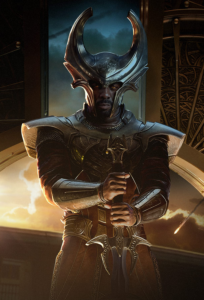 Also, our gods and goddesses are colorblind. That means that it doesn’t matter what ethnicity you come from, if you’re Heathen, you’re with us. Yeah there are some folkish (AKA racist) types who have decided for whatever bizarre reason that only white, Northern peoples can worship our gods, but that’s totally incorrect, especially given the recent DNA and bone mineral compositions discovered in archaeology. People who have occupied Viking burials have proven to originate in Poland, Russia, Slavic countries, Mediterreanan countries (including Italy and Spain), Mongolia, and North Africa.
 Warning: SCIENCE! or How We Know Where People Came From
We know Vikings came from different ethnicities because scientists analyzed the strontium isotopes in their teeth and compared it with the soil of many places. The land you grew up in leaves a lasting strontium signature that is unique to that land. Scientists can determine where the person in a particular gravesite grew up given the unique set to isotopes. So, even though we only have some writings about a black Viking, we can infer from the strontium isotopes that those who were given warriors’ burials (or, at least burials with grave goods) were not just from Scandinavia (although many were), many were from other regions and other skin colors. Many had Mjolnir pendants. Surprise!
Vikings Went EVERYWHERE
 This should come to no surprise to anyone because the Vikings traveled as far east as Baghdad, as south as North Africa, and as west as the Eastern seaboard of North America. We know from new finds in archaeology that there was a thriving eastern trade between the Vikings and places such as Constantinople, Baghdad, and a number of cities around the Caspian Sea. Vikings left runes, carvings of their ships, and other artifacts where they went. It makes sense that they mingled with the local populace, and even obtained mates from those locations.
Heathenry is Egalitarian
So, it makes sense that Heathenry should be egalitarian, in respect to other faiths. Heathens incorporated the gods of others with their own gods, and worshiped whatever gods made sense to them.
Christianity, however, is a religion of persecutors. I have plenty of documented evidence how pagans were constantly forced to convert — often at sword point. The so-called Christian persecution by Romans doesn’t really hold up when comparing the biblical texts to Roman historians. Did persecution occur? I don’t doubt some did, but I more suspect those stories were made up to provide martyrs for the church.
7. Heathenism treats men and women more as equals; Christianity is misogynistic
Heathenry treats our men and women as equals now, and in the past, they were treated almost as equals. We know that the concept of the shieldmaiden isn’t a fanciful story, given that we’re now discovering burials with swords and weapons of war include women, whose skeletons were mistaken as men’s until someone thought to run DNA analysis on them.
Misogyny as a Christian Tradition

Now, some people discount this, saying that they didn’t think the women actually used the swords, but as one archaeologist so deftly put it, “Would there even be an argument that the person buried with the sword was a warrior, if that person was male?” Excellent point.
Women were often priestesses called Gydhja. Heathens revered these women and they helped people when it came to healing, seeing the future, and talking to the gods. Yes, there were priests (Godhi), but women played a significant role as well.
Although nowadays some sects of Christianity allow women priests, this is something that has occurred within the past fifty years. Even so, many sects–including the Catholic Church–do not allow priestesses. Obviously a travesty and it aligns with what is in their bible.
Women Fought and Traded Alongside Viking Men
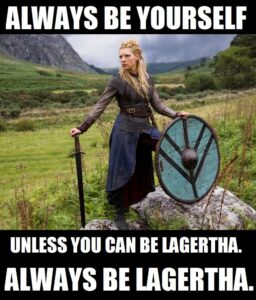 Preconceived notions aside, we know from burials that women did accompany men given the strontium isotopes in their teeth. And while more Viking men than women came from Scandinavia, there was a large enough faction in both sexes which came from other places. In other words, there was more diversity in women than men, but at the same time, there were enough men who came from different places who were given Viking-style graves to suggest that the women weren’t slaves or concubines, necessarily. The grave goods in the burials suggest that they were people of some status other than slaves.
Not all women who came with the Vikings were warriors, though. Most likely many of them were traders, artisans, skilled crafters of goods, and other support laborers. Sure, there were the camp followers, but there was also a need for someone to support the armies or raiding parties, as well as establish connections with the locals in the area. Both men and women could easily fill that role.
Women in Viking Society Had More Rights
We know that a woman could divorce a man under certain circumstances. We also know that women could own land, titles, and a fair amount of property, especially if they were widowed. Women were priestesses, and seidr was considered more of feminine magic than male magic. Freyja was a major deity, right alongside Odin and Thor. We know that Freyja gets first pick of the dead warriors — which presumably includes female warriors. Yeah, Odin gets the second cut. Think about that.
I’m not claiming that everything was fair for women. In fact we see in our myths that Odin was and could be downright misogynous. Just read the passages from the Havamal about his belief concerning women, and I rest my case.
Christianity is Misogynous
Okay, so let’s look at what Christianity says about women. Paul says women should obey their husbands in Corinthians. Timothy has a slew of bullshit. Outside of the Bible, you have people like Martin Luther saying “If a woman grows weary and at last dies from childbearing, it matters not. Let her die from bearing, she is there to do it.” Wow. What an asshole.
Women have almost always been the victims of witch hunts since Christianity began. The “Thou shall not suffer a witch to live” in the Bible (Exodus 22:18) has given religious leaders a reason to murder innocent women throughout the ages. And while men did get caught up in this bullshit, more often women are the targets.
6. Most Heathens accepts Science as fact; Christians, not so much
Most Heathens accept science and the information it has brought to us on how our world was formed, Sure, we have our own version of fundamentalism, but if pressed, I think most Heathens would accept the latest archaeological findings.
Norse Creation Stories
 Our religion has its own creation stories. We certainly don’t accept that the world was created in six days like the Christians. Most of us also don’t believe that our world came into being when fire and ice joined together and made rime that a cow licked to create Frost Giants and gods. And most of us don’t believe that Odin and his brothers killed Ymir to create our world. If hard pressed, I’d say that Heathens consider the Norse creation story as a myth and not fact. I believe the story is an allegory of sorts, explaining to a Bronze Age to Iron Age culture how the world came into existence. It gives a satisfactory tale that people enjoy listening to.
Viking Creation Stories Are Oral Traditions, Similar to the Children’s Game of Telephone
Viking stories were oral traditions. That means they weren’t written down. Sure, we have images of certain stories that show that the key components were still told, but oral traditions change after time. Since the creation story was written down well after the Viking Age, chances are it changed quite a bit over the years. Chances are the story people told before the Viking Age began and what they told after Scandinavia was Christianized were probably very different, as our Northern ancestors told and retold the stories countless times, embellishing them for the audience, similar to the children’s game of telephone. (Or is it called “operator?” I can’t remember.)
My point is Heathens generally don’t consider these stories as gospel. They are stories about our gods and heroes that have elements of truth in them, but aren’t considered a science text. Even so, we have sagas that have led us to discoveries such as the Viking settlement in North America and other interesting archaeological finds.
5. Heathens consider our writings incomplete and written by humans; Christians believe that their Bible is the word of their god
 Bronze age to Iron age peoples wrote the Bible, not their god. There are so many inconsistencies within the Bible that you really can’t expect to take the text as law. Heathens, on the other hand, know that our stories were passed down in an oral tradition until someone like Snorri Sturluson wrote them down. We know they’re not complete, and we know that they’ve been influenced by Christianity.
We also know that there are common themes in the Norse stories we read. For example, we know that Tyr sacrificed his hand to Fenrir because we see images of Fenrir and Tyr on artifacts.
What about the Havamal?

The Havamal does have misogynistic statements in it. But you do have to consider the source–if indeed Odin wrote it. I don’t consider Odin a role model for how to treat women, and you shouldn’t either. So, like anything, Heathens take the story with a grain of salt. Or they should.
 Heathens Accept Unverified Personal Gnosis or UPG (More on this later)
As Heathens we accept that the Heathen gods are still around and speak to us personally. We don’t require a church to hear our gods.
Okay, I’ve espoused enough for this time why Heathenry is infinitely better than Christianity. I’ll hopefully have a wrap up sometime soon. Again, take what you like out of this and tell me what you think in the comments section.
—
Disclaimer: This post contains affiliate links. If you purchase something from these links, I get a small stipend which helps support The Rational Heathen. I would encourage you to support my site. Thanks.
Did you know you can become my patron for as little as $5 a month? This entitles you to content not posted anywhere else. Plus you get to see posts like this three days before the public! Without patrons, I’d be having a very hard time keeping this blog going. Become a patron today! Become a Patron!

 Yes, yes, there was most likely a
  brother and sister. Now, tell me, would you leave a firearm out where kids could get them? I thought not.
 Okay, so you’ve read the whole Norse creation myth how ice and fire collided to make a rime, and a cow licked the salt from Ymir. And how Odin and his bros slayed Ymir and created Midgard. And how Odin and his bros created Ask and Embla…
 (I kind of like this), but honestly, is it for eternity? We don’t know. And oddly enough, Valhalla has plenty of adulterers, oathbreakers, and murderers, according to the sagas, so I really doubt Nastrond keeps them all there.
 eternal punishments, but for the most part normal people existed in Hell as shades. Heroes were brought to the Elysium Fields. Everyone else just sort of hung around in an okay sort of afterlife.
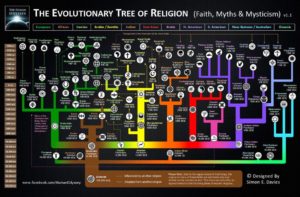 Although religion primarily came from the Middle East, we still have proof that Stonehenge and other monuments were erected some 5000 or more years ago–around the same time as the Sumerians were creating their own monuments. I can’t say that Heathenism sprung from these early roots of sun and moon worship, but certainly there are links to shamanistic and animistic beliefs.
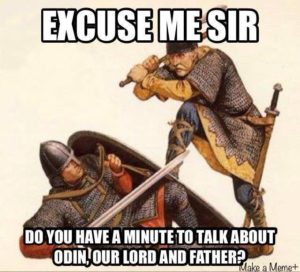
 When was the last time you had a Heathen knock on your door and ask you if you knew about the good news from Odin?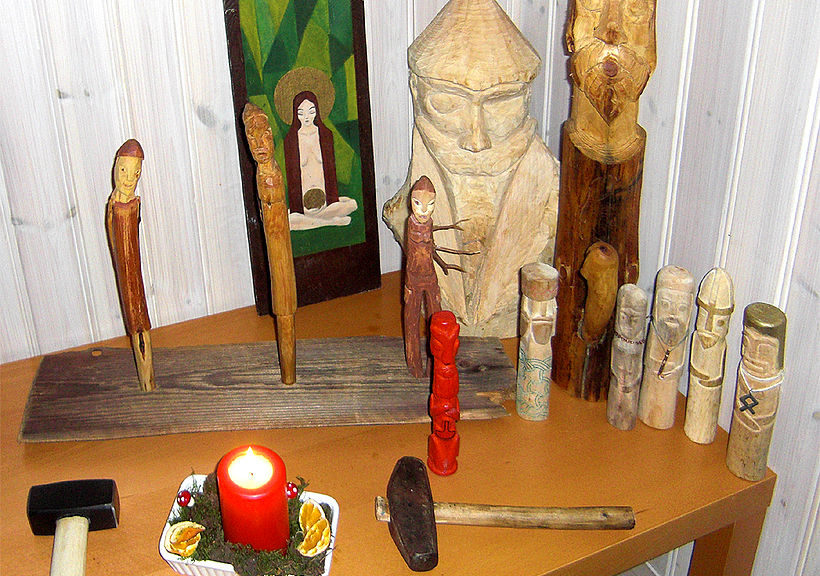
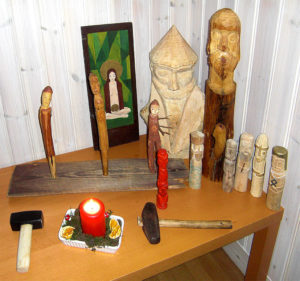
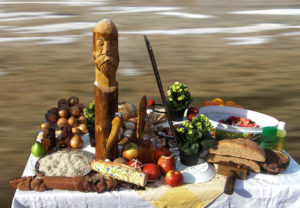 Because of Christianity, we really don’t have much information to go on when it comes to Heathen altars.. We can assume they set altars in the corner of the house. Most likely, they had small statues and other objects that they considered holy. Maybe they were significant to the wights of the area and the gods. Offerings were left at the indoor altar to the gods and local wights. and it was a place to reflect and pray.
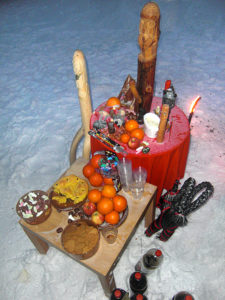 in a special spot in your yard. I’ve heard of people using sticks, or even tongue depressors and drawing the pictures of the gods on them using permanent markers. You can also write the names of the gods you wish to honor on the stick in runes and use them that way.
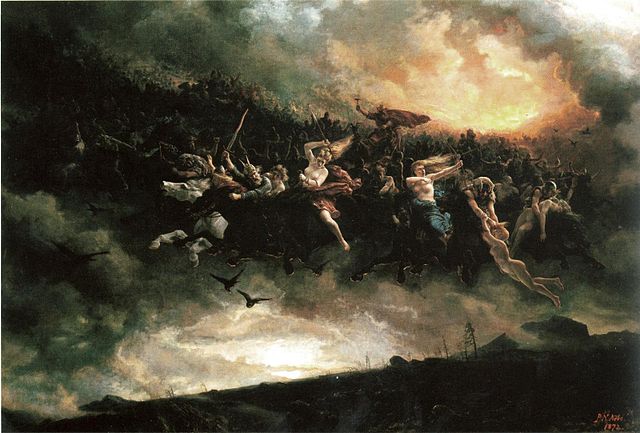 Moon and the Sun move across our sky, rather than the Earth revolving around the Sun and the Moon revolving around the Earth. That there really was a cow that licked the brine from Ymir and the gods, thus creating the first pantheons. That Odin along with his brothers slew Ymir and fashioned our Earth from Ymir’s bones. This is more fundamentalist than anything, and again, since you really believe that, nothing I’m going to tell you is going to make a difference.
 Now, if you believe our gods manifest themselves in physical forms, that’s fine. I’m good with that. I believe that they can and do, but I also don’t believe that Asgard exists in our dimension. I tend to
 Soft polytheism tends to look more at the concepts of the gods as archetypes. In it’s extreme form, it’s closer to atheism than a religion. I would not consider most soft polytheists in that group. Many are pantheists, which allows the worship of other gods, and it equates the universe with the gods. I sit more comfortably in the pantheistic version of Heathenry, because I believe that the universe and the gods are the same. My belief is our gods go by other names in other religions. I chose our gods not only because I am most comfortable with them, but because I have had interactions with them by those names.
 Quick, without Googling, name five Heathen gods or goddesses other than Odin, Thor, Freyja, Loki, or Hel. Now, assuming you didn’t cheat, can you tell me whether they’re Aesir, Vanir, Alfar, or Jotunn? (Again without Googling.)
 The other day, I was talking to an agnostic on Facebook (yeah, you know who you are) who quizzed me about being a real Heathen. I wasn’t really bothered by it, but it got me to thinking about the Neo-Heathens who have joined Heathenry from watching pop culture movies and TV shows about Vikings and the gods. (Marvel springs to mind.) I also started thinking about the tendency for certain people in our religion to declare themselves gatekeepers or Asa-popes. Inevitably, there’s a clash between the Asa-popes and the neo-Heathens, because the Asa-popes and Gatekeepers are annoyed with the neophytes. They are annoyed that someone would show interest in our religion because of some pop culture reference.
 That would all be well and good, except Heathens are pretty much a drop in the overall pagan pool. We don’t have the numbers to turn anyone legitimately seeking knowledge away. (Except the neo Nazis, whom we really don’t want.) Heathenry and all its forms (with the exception of the white supremacists) might equal 250,000 in the world. If that.
 My point is that people back then didn’t have a single view of the gods. Like now, they chose their own traditions and their own gods to believe in. The concept of organized religion occurred with the growth of cities and with priesthoods looking to grab power and keep themselves within the power structure. Sure, you had shamans and whatnot doing the power thing if you were in a tribe, but I suspect most Heathens revered ancestors and tutelary spirits, with an occasional major god or goddess thrown in for good measure.
 What About Pop Culture Heathens?
 I was reading the pagan forums on Patheos the other day and I thought about how Heathens are underrepresented there when it comes to pagans. And then I started thinking about how much of paganism is really geared toward the Wicca crowd and maybe the Celtic crowd, if they’re lucky. So, I started thinking about why Heathens (to paraphrase what Rodney Dangerfield used to say) don’t get no respect. To this end, I’ve come up with five reasons why Heathenry isn’t represented in paganism more often, but I bet you can come up with more, if you put your mind to it.
 and Folkish Organizations
 When Thor and Tyr called me to Heathenry, I was relieved to find out that magic played a minimal role in the religion. That being said, a lot of people are
  denounce that person if they don’t immediately join the recon trolls. In fact, you’ll find a bunch of misogynists and Asa-popes telling people how to practice Heathenry. When the person balks (as they rightfully should), the trolls start calling them Marvel fanboys (or fangirls), Wicctrus, or Lokeans (never mind that
  A big problem in Heathenry is the overall ambiguity of our beliefs. We really don’t have a lot of stories to go on — not like the stories we have from the Romans and Greeks about their gods and goddesses. Islamic and Roman historians as well as Christianized northern peoples who lived two hundred years later wrote down all of our stories.
 Ah, the Heathen life. The Rational Heathen has goats, which means spring kids, and the insanity that brings. If they all had lived, I would’ve had ten Kids on the Block. Yeah, bad pun, deal with it. Right now, I’m down to seven and as bad as having a 30 percent attrition rate is, it beats out the really bad year when I lost all the kids due to various aliments.
 It’s Not Easy


 Now that I’ve talked about five reasons for not becoming Heathen, the flip side is what are good reasons for becoming a Heathen. Naturally, there are people who may disagree with me, but I think there are good reasons for becoming a Heathen. Let’s get started… [