5 Reasons Why Heathens Don’t Get No Respect
 I was reading the pagan forums on Patheos the other day and I thought about how Heathens are underrepresented there when it comes to pagans. And then I started thinking about how much of paganism is really geared toward the Wicca crowd and maybe the Celtic crowd, if they’re lucky. So, I started thinking about why Heathens (to paraphrase what Rodney Dangerfield used to say) don’t get no respect. To this end, I’ve come up with five reasons why Heathenry isn’t represented in paganism more often, but I bet you can come up with more, if you put your mind to it.
Problem 1: We’re Tiny, Relatively Speaking
If you want to talk about a religion that has few numbers, Heathenism and Asatru are pretty small as a world religion. Sure, there are a few census that suggest we have maybe 100,000 to 200,000 Heathens in the world, but seriously, that’s just a drop in the bucket. Consider the 800 pound gorilla in the midst (pun intended) of Wicca. Wiccans may make up about 2 million in the United States alone, and who knows how many in the world? It’s easy to see just by that number why Heathenry is a footnote when it comes to paganism.
Problem 2: Association with Neo-Nazis, White Supremacists,  and Folkish Organizations
Many Heathens aren’t racist, folkish, or white supremacist. But not all of them. One only has to take a look at the Neo-Nazis and the Odinists who support a whites-only mentality. Other groups such as the AFA have excluded other ethnicities and the LGBT communities within their Heathen form of paganism. Even though a number of very good Heathens and leaders within the Heathen community have denounced this behavior, we see time and time again Internet and news stories featuring Heathens as bigoted, racist, and anti-LGBT.
I’ve said it before, and I’ll say it again. Just because you don’t count those folk as “true Heathens” doesn’t mean that the rest of the world shares your opinions. You can say “not my kindred” all you want, but the reality is the rest of the world is judging you. Plain and simple. If you don’t denounce them, everyone is going to take your silence as tacit agreement.
Heathenry isn’t for bigots. Even our gods didn’t stay within their own kind when it came to their kindred. Our gods took in Jotunn, Vanir, Light Elves, and humans. Many gods had Jotunn, Vanir, and Light Elf consorts and lovers. Hel, even Loki mated with a horse.
Problem 3: Our Magic is Minimal
 When Thor and Tyr called me to Heathenry, I was relieved to find out that magic played a minimal role in the religion. That being said, a lot of people are more attracted to magic than I am, which is presumably why people are more attracted to Wicca than Heathenry. Oh sure, we have the runes and Seidr, but what else? Maybe skinriding? We don’t usually do magic in the form of spells or enchantments.
Our magic is through our gods, ancestors, and wights. (The fact that I’ve never seen a wight is irrelevant.) Many Heathens believe in the gifting cycle with gods and wights to obtain what they want. Some use Seidr, runes, or other forms of Norse magic. Others will blend in forms of magic from Wicca. Reconstructionists and others derisively call those who add more magic from other religions “Wiccatru.” More on that later.
So, people who are looking for magic tend to bypass Heathenry and go for something like Wicca that enables them to worship our gods while still adding magic spells. Hmm.
Problem 4: We’re a Stuck Up, Exclusive Lot
When a person first looks into Heathenry, they’re often met with people who are quick to deride and  denounce that person if they don’t immediately join the recon trolls. In fact, you’ll find a bunch of misogynists and Asa-popes telling people how to practice Heathenry. When the person balks (as they rightfully should), the trolls start calling them Marvel fanboys (or fangirls), Wicctrus, or Lokeans (never mind that being a Lokean is a choice and not an insult). So, a lot of people with less commitment are going to leave and go elsewhere.
It stunned me when Tyr and Thor contacted me. But I knew what I had experienced and even when I entered the ugly world of the Internet recon trolls, I knew I was right to stay and deal with them. You see, the gods contacted me and (presumably) not the Internet trolls, so the trolls didn’t deter me. I just had to figure out a softer landing spot, which I eventually did. And I started writing The Rational Heathen just to put down my thoughts and feelings, not to mention some of my experiences. Apparently it resonated with some of you because you’re still here with me.
Problem 5: We Don’t Agree on Much and UPG is often an Ugly Word
 A big problem in Heathenry is the overall ambiguity of our beliefs. We really don’t have a lot of stories to go on — not like the stories we have from the Romans and Greeks about their gods and goddesses. Islamic and Roman historians as well as Christianized northern peoples who lived two hundred years later wrote down all of our stories. We only have one depiction — and a Christian one — of the Irminsul. We have tales which refer to other stories which were never written down.
So, in light of the lack of evidence, there’s a lot of conjecture. And with conjecture is also Unverified Personal Gnosis or UPG which many people don’t take into account. Some Heathens are outright hostile to UPG as well. So, there is no consensus on what is correct and what isn’t, except among the different factions between themselves. That division and the accompanying hostility turns people away quickly.
So, there you have it: the five reasons why Heathens don’t get no respect. Do you have some thoughts about why Heathens don’t get no respect? I’d love to hear it in the comments.


 To kneel to the gods or not kneel to the gods. Those who believe in not kneeling to the gods believe that it invokes servitude and disrespect for oneself as an able warrior for the gods. Those who believe in kneeling to the gods believe that we are foolish to not acknowledge that the gods are greater than us and there is historical precedence for kneeling to the gods. Well, as usual, the Rational Heathen has something to say about this.

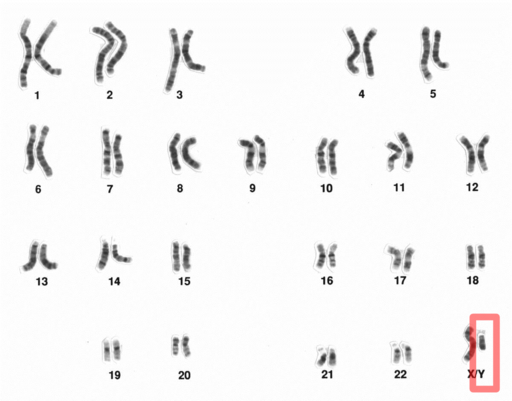
 Tribalism and the Y-Chromosome Bottleneck
 Wars between clans further took out males who were looking to defend their clan and tribal wealth. Those males who were of lower station often didn’t mate and their genetic code was not passed on. Furthermore, because clans were often isolated, we see a fair amount of close breeding, if not inbreeding, involved. We know that the
 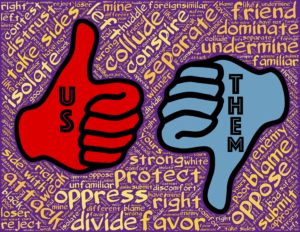 Tribalism is Okay, but within Limits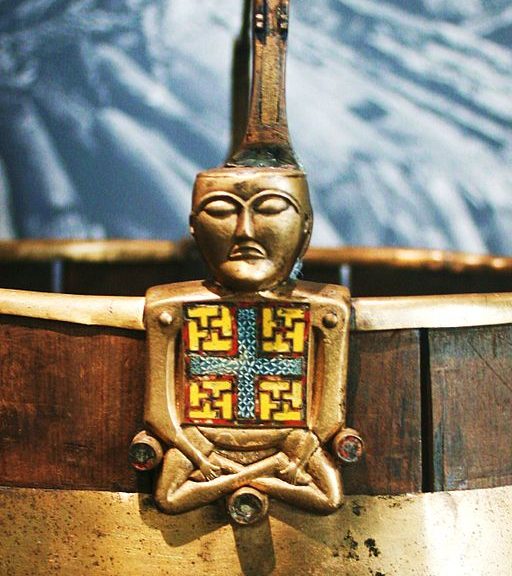
 Once again, I’ve stumbled onto some really big bullshit about arch heathens, so I think it is time to make my opinions known on the subject. Arch heathens, if you get the current vernacular, were an impressive, idealized version of the Heathen. Sort of an uber Heathen, as it were. These purported arch heathens kept the faith pure and knew some sort of unwritten code of conduct across the ancient world that spanned from Greenland to Russia and south into Africa, and across several thousands of years ago, ending with the conversion to Christianity. They were of one mindset and kept the faith pure. (Ein volk! Ein reich! Ein führer!) <– That was sarcasm for those who don’t recognize it.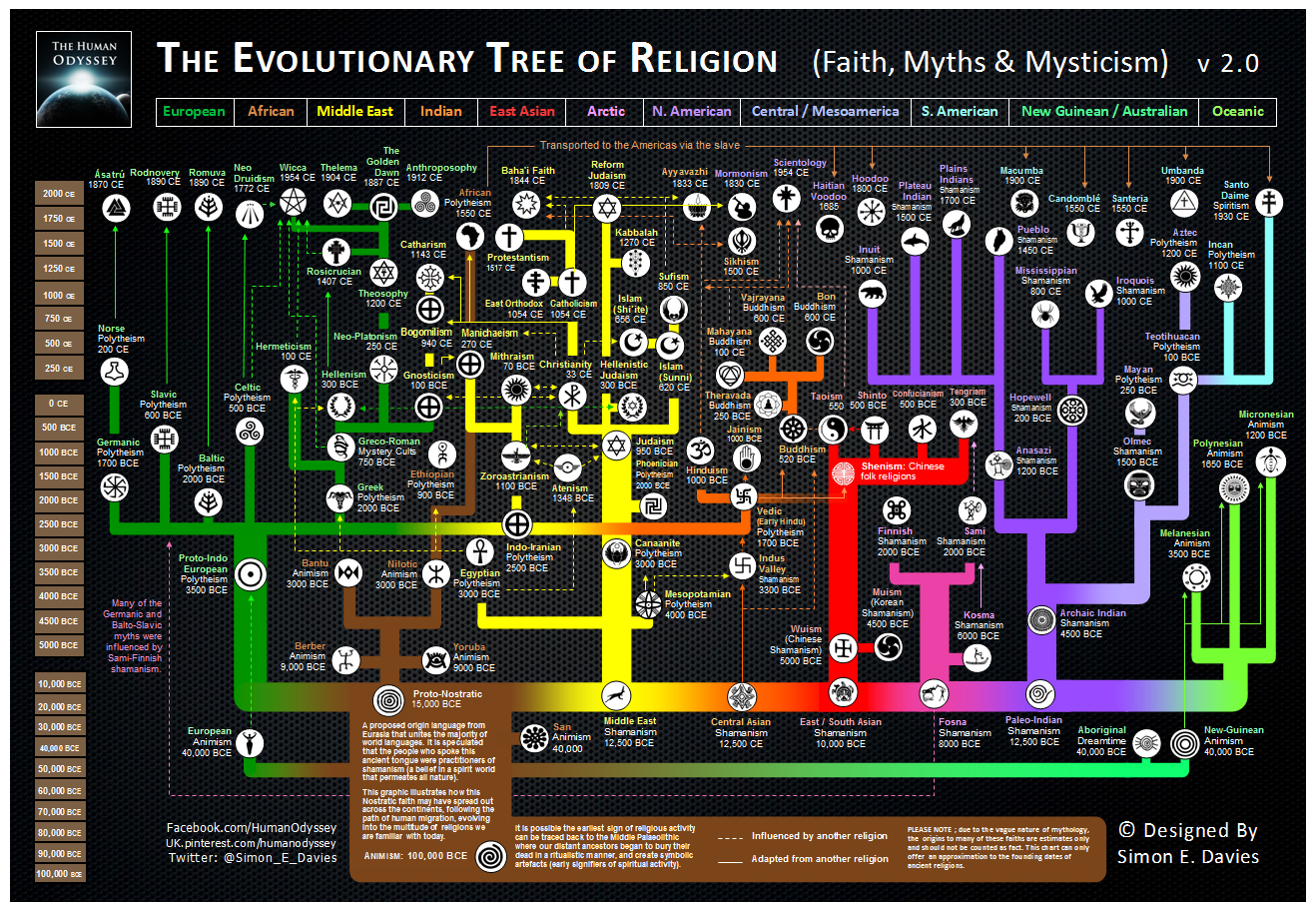
 guy who was in Germany at 1700 BCE? Are we talking about the guy back in 3500 BCE wherever the Hel he was? Or are we talking about the Viking arch heathens? And which Vikings? Are we talking Iceland or Russia? Maybe Sicily? Or France? How about North Africa?
 So, we’ve established that our Heathen ancestors worshiped our gods or forms of our gods for 2700 to 4500 years and have worshiped our gods across the ancient world. We know that religions change all the time, even in the past. All we have to do is look at other forms of religion and see that this is so. Christianity is an excellent example. We can look at the 2000 years Christianity has been in existence and we see plenty of differences, even if we only look at the Catholic Church. Originally Christianity was a conglomeration of ideas that came from Judaism, Zoroastrianism, Gnosticism, Mithracism, and other religions. Eventually, the Council of Nicaea got everyone on the same page, but there were future schisms. The Catholic Church split into Eastern Orthodox and Western Roman Catholicism. And that’s not even talking about the Protestant Reformation.
 have pinpoint accuracy with historical writings or archaeology. A lot goes on in 200 years in cultures. Don’t believe me? Look back 200 years in our recent past. In 1818, we had no car, no electricity, and the United States had only 20 states. Too modern? Okay, let’s compare 1818 with 1618. Jamestown was founded in 1607 and by 1618 there were a handful of new settlements. People still believed in persecuting witches then. Ships were pretty much wind driven. The Mauritius sailed in 1618. In 1818, we were working on the cusp of the Industrial Revolution with steam engines and steamboats. In 1810, England had its first primitive railroad. By 1827, we had the first railroad in the United States. The 30 years war started in 1618 started by the Jesuits against the Protestants. By 1818, the United States had freedom of religion in place in the Constitution.
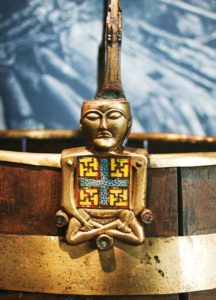 I’ve talked a lot about how Heathenry had been influenced by other cultures and religions. Our ancestors traveled — a lot! They had boats, they had horses, and yes, they had their own two feet. Heathens traveled east into Russia, south into Africa, and west into North America. They saw many different cultures and peoples — and they didn’t kill or conquer all of them. Many they traded with. We have found religious symbols from other cultures (such as the Buddha!) in gold hordes, and we know that Norsemen and Islam have had contact. Since Heathens were open to other forms of beliefs, even then, some aspects of other religions got adopted and incorporated as people from other cultures became assimilated into the Heathen culture.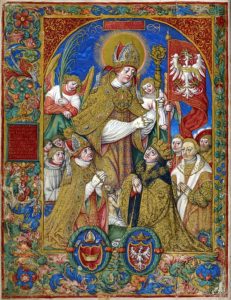
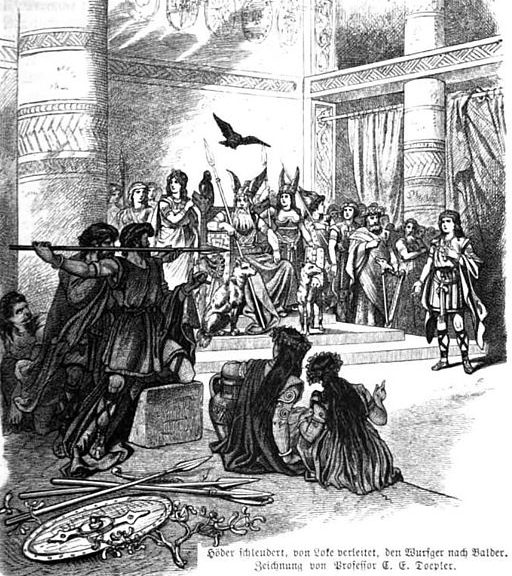
 One of the most iconic stories in Norse mythology is the death of Baldr. It is probably the best known among Heathens and often recited by the anti-Lokeans as a way to justify why the Rokkatru are wrong to even consider venerating Loki and his ilk. While I’m not Rokkatru (although I suppose someone can point to me being a follower of Skadi as being a Rokkatru), I do have a deeper analysis of why the story of Baldr’s death is more than face value.
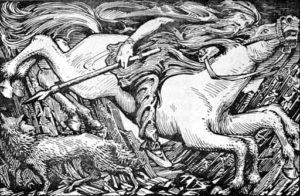 Baldr had nightmares of his death. Odin therefore went to Niflheim to consult a dead seeress to find out what was the cause of Baldr’s nightmares. The seeress told Odin that that Baldr would die by Hodr’s hand (Hodr is the brother of Baldr).
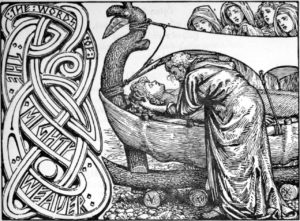 was not throwing things. Loki offered to guide Hodr’s hand so he could throw something. He put the mistletoe into Hodr’s hand. Hodr threw and the dart pierced Baldr’s heart. Baldr fell dead.
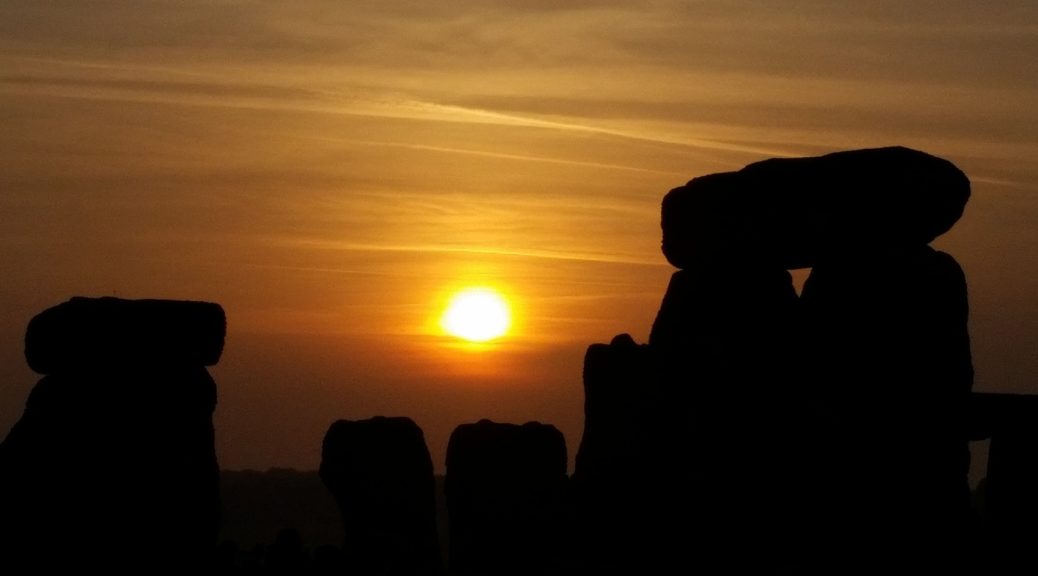
 The story of Baldr is the story of the seasons and the natural cycle of life. Our northern ancestors revered the sun and its life-giving heat and warmth. We know the summer solstice was a holy time for northern pagans — especially those who built monuments to the sun during the neolithic age. Baldr is clearly associated with the midsummer sun — the sun at solstice. It is no surprise that his blind brother, Hodr (winter) slays him with the help of Loki (who is a chaos god) which brings about renewal (Ragnarok). Baldr is the renewal of life and all the beauty associated with it. Hodr is the old age and the impending death. Loki (chaos and entropy) brings these changes about.
 It’s little wonder why the mistletoe is a symbol of the winter solstice, since it is the symbol of Baldr’s death. But the winter solstice is also the symbol of the return of life. We know that the days will grow longer again after December 21st, just as we know the days will start to grow shorter after June 21st. So, this summer solstice, raise a horn or glass of mead to the god of rebirth and renewal. Because we know that Baldr may “die” with the oncoming winter, but he will be reborn once again. (And the Christians thought that they were the only ones with a god who dies and is reborn?)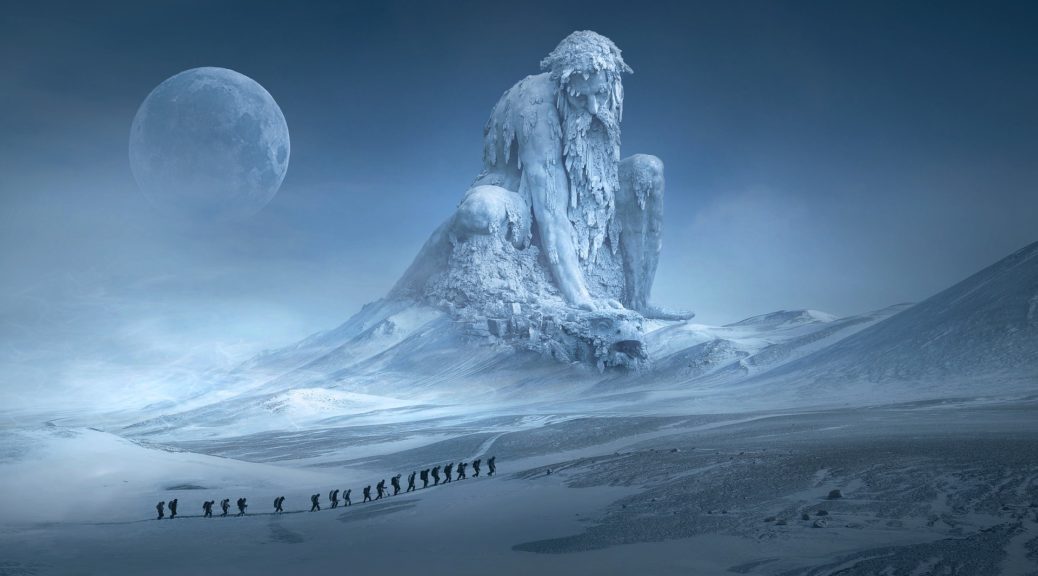
 Apparently my piece on Unverified Personal Gnosis struck a chord with many of my readers. So, I think we need to talk about recognizing what an Unverified Personal Gnosis actually looks like. Mind you, this these are not hard-and-fast rules, but they are ones I use when discerning whether this is UPG or someone’s overactive imagination…
 If you’ve been a Heathen for any amount of time, you’ve heard of UPG or
  s over Unverified Personal Gnosis because it is something that isn’t easily provable. It’s personal, meaning that only one person has had that revelation. We can’t go back and quantify that the gods really did speak to that person. To use logic, it’s very hard to prove a negative.
 (Oh shit, someone knew I was going to drag them into this.)
 UPGs had to be the way our ancestors learned about the gods. Think about it. There wasn’t a giant classroom with a bunch of Heathens sitting around throwing spitwads at each other while Odin tried to teach them cosmology. (Or was it Tyr?) I can just imagine Loki teaching everyone how to misbehave while Thor comes in to maintain order. Yeah, warped mind. Deal with it.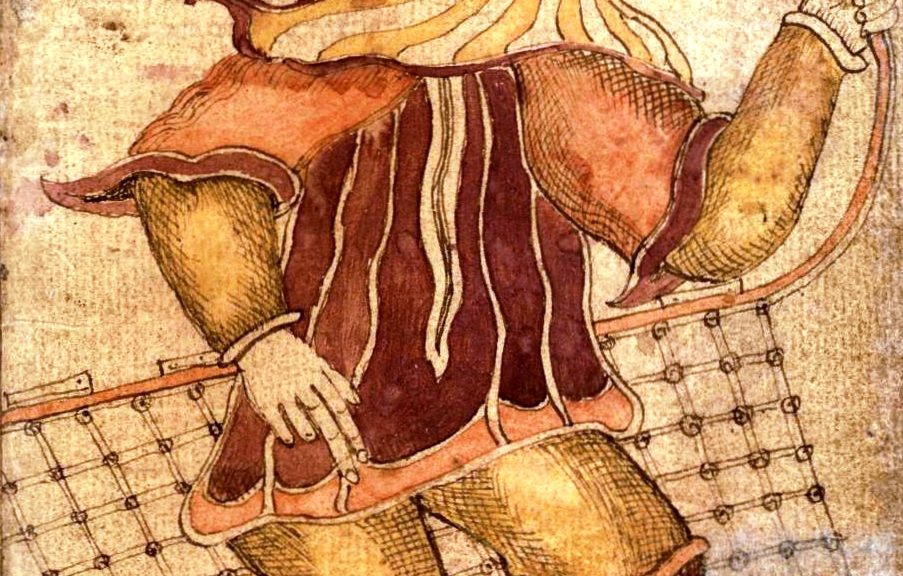
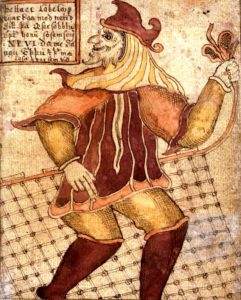 Loki is a bit of an enigma when it comes to the Northern pantheon. No god causes such turmoil among Heathens when it comes to our gods. Did Loki really exist in the pantheon? Was he worshiped? Was he a creation of Snorri? It’s almost as if the trickster intentionally caused this entire debate–which would suit him just fine.